

Researchers (and anyone involved in early phases of innovative projects) can struggle to follow project management rules and find it hard to fill in (and especially to stick to) a Gantt Chart.
The issue is that corporate expectations for project management keep growing because you need to report to clients, investors... tensions can then arise between:
- the most competent experts in their field, those who created the company and filed the historic patents
- a company that increasingly struggles to trust them when they give dates and that cuts the funding.
Let's understand the problem to propose solutions.
The difficulty of planning and tracking research
When you ask the team at 50% of planned time, they say they have completed 50% of the research. But this tells you nothing about whether they have found or will find anything, nor when.
Completing 50% of tasks does not indicate that you have reached 50% of the objective, does it Mr. Pareto?
"Searching" is not an objective
"Searching" is a verb (a task), not an objective (nominal/passive form). Examples:
- Inflate the tire / the inflation is complete.
- Repair the radio / the repair is complete.
- Search / the research is complete.
The research is complete??
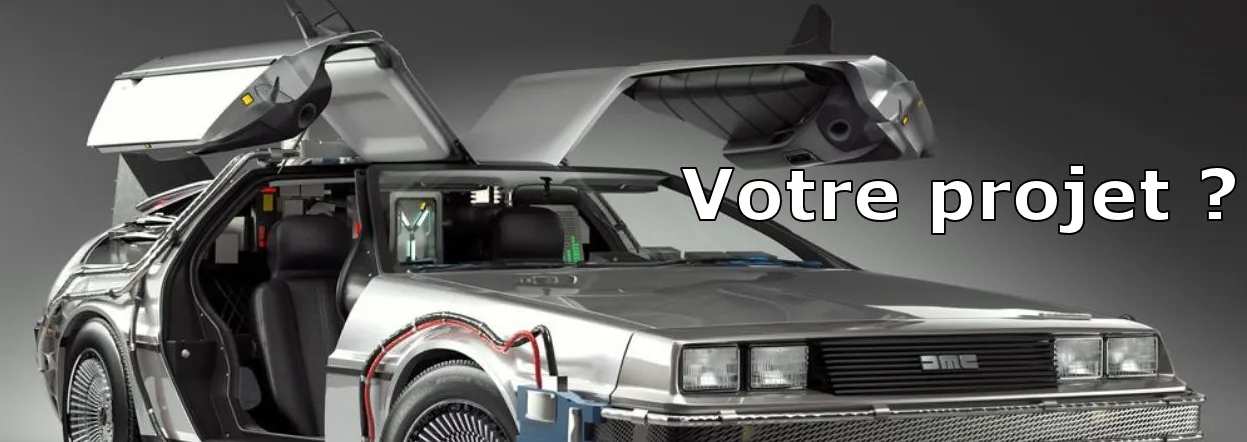
"The research is complete" is not an objective because the end of research does not mean reaching the research objective: it is simply the end of allocated time. Example: we searched for 1 year for time travel, the research is done but we didn't find anything.
A matter of approach and vocabulary?
SolidCreativity's Agile management for early phases relies on objectives, not tasks. Challenge the team: their objective is to FIND.
| Verb (task) | Nominal form (objective) |
|---|---|
| Search | The research is complete |
| Find | The FINDING-NESS (Trouvage) is complete |
TROUVAGE (finding-ness)
Since the objective of "searching" is "finding", we invent a nominal form: "trouvage" (finding-ness).
Video: https://youtu.be/9J9KyAHbWOY
With this single invented word we have a new project management concept, we can track the progression of parameters, sometimes measured, sometimes evaluated.
Examples of trouvage in action
Let's take 2 examples with the same 80% task completion on the Gantt:
Example 1:
- Research completed: 80% of tasks
Additional information through trouvage:
- Team confidence of finding by the set date: 95%
- Theoretical trouvage level: 75%
- Demonstrable trouvage level: 60%
- Trouvage elements usable if the project stops: 45%
Example 2:
- Research completed: 80% of tasks
Additional information through trouvage:
- Team confidence of finding by the set date: 5%
- Theoretical trouvage level: 15%
- Demonstrable trouvage level: 0%
- Trouvage elements usable if the project stops: 0%
While both examples have the same progress in the planning, the objective achievement is vastly different; we realize this thanks to trouvage, which allows us to track project progression and have reporting that enables decision-making.
Agility works in R&D too, it is different and adapted
Discover our client references and our approach to hardware agility.
Go further: Agile Methods for Physical R&D training.
